Thursday, 16 October 2014

Assorted odds and ends

I'm feeling a bit under the whether today, so here's a short summary of what's to come in the future.


After Arthur is placed on the throne the stories start to diverge more strongly, and the structure frays. Arthur had become a radiant literary and supposedly also historical character (compare that with OUR scarcity of sources), and from the latter half of eighth century on we have to always consider the possibility of revisionism. Stories and tales were passed on through word of mouth, in some circles also through books, and the resulting alterations in the telling became the basis for new stories of themselves.

Others were attempts to modernise older tales, to ground them in the supposed contemporary realism that was attributed to Arthur. Since there was no consideration for copyrights or intellectual ownership it was also common practise to rewrite stories from other regions or languages, sometimes alluding to some ominous ancient source, some book or some sage, and indirectly claim authorship. You might some of them call Fan Fiction, and that certainly explains some of the lack of restraint in what was recounted in the stories.

I want to stress again that we can in no way assume that each and everyone of those stories was considered hard facts, but the appearance of fantasy tales alongside real historical events without any hints to their fabrication in some very well documented sources suggest that people were willing to accept them, even if only to fill in the blank spots. Among them are encyclopedia and historical essays that have been considered genuine history up until the middle of the 17th century and sometimes even later then that.

The period between Arthur's coronation and his death were (and are still) fair game for any writer, and many took the freedom to plug in their own stories and local legends into his narrative. This explains a lot of the thematic variety (or rather, outright inconsistencies) we will encounter in the body of tales I will introduce, but also even inside the tales themselves, as the stories are literally an amalgam of tales from all over (continental) Europe.

In modern terms, imagine a story originally told with the Batman as the protagonist suddenly published with Spiderman in his place. Or imagine a world in 50 years, for some reason most of our movies have been destroyed, and consequently Heath Ledger's Joker is connected with his character in 10 things I hate about you and someone makes a story of that. Again, that guy is lucky, and his retelling is 50 years later still the only thing we know of Heath Ledger and the Joker, and this version will be the definite story. Future scholars will try to glean some historical significance from this bastard child of a train wreck of a story, and that's how we feel about Arthur today.  That happens all the time in all media, and that is what happened then. The only difference would be our rejection of these stories as facts, but bear in mind that at all times Arthur's tales have always been a form of entertainment, too.

This means that we will eventually talk about such diverse topics as chivalry, knight hood and especially a lot of the characters and their origins. For after a certain point in the narrative Arthur fades into the background of the narrative, giving the spotlights to his knights, and among them chiefly Sir Lancelot. And here you will really see how originally unrelated stories were merged with Arthur, prominent examples include Tristan and Isolde, but also Sir Parcival and especially the story of the Holy Grail. Essentially that all will become a grab bag of tropes, and anachronisms of a span of close to a thousand years (ca. 500 - 1500), that even today serves as a basis of DIY stories of the old King. His stories tend to reflect to some degree the status quo of historical facts, but he also frequently is the lens through which Author's fracture their on leitmotifs.

The tales of Arthur have become a literary universe, a sandbox to set stories in, and we will try to deduce how it came to be, where it's roots are and what it can tell us about the nature of writing.

Tuesday, 14 October 2014

The story of Arthur, Part II


When last we stopped, we had left Arthur in the care of his (unknown to him) foster-father Hector.

Obviously, his ascend to the throne is linked to his father's death, Uther Pendragon, whom he follows. His claim to the throne being rather dubious and nontransparent, it's his luck that there's a famous stone with a sword in it, that he just in time pulls out to prove his claim.

I tossed that bit out a bit irreverently because that's what the tails usually do. The story of Arthur is a very long one, and this bit is so early in his life that it tends to get all but forgotten in light of his later exploits. This is emphasized by the fact that there are two famous swords associated with him, the other one being the ubiquitous Excalibur, which has left a much deeper impact in popular culture. There are also versions where Excalibur is the sword in the stone, but Excalibur has a much more interesting history of it's own, and warrants it's own article later.

While adolescent, Arthur, going by the name of Gwydion or some such, is a squire to Kay and doesn't have much hope of ever being more than that, although he certainly doesn't lack the ambition. Kay is a bit shady, and he considers himself superior to his foster-brother. Although there is definitely affection between the two of them, he let's Arthur feels this more than once.

After the old Pendragon's death, a tourney (we'll have much more tourneys before this is over!) is held in his honour, and when Kay arrives there having forgotten his sword, naturally he sends Arthur back to their lodgings to get it. Arthur is a little stressed out because of the clock ticking and the hiding he'll get when he won't return with the sword in time decides to get the sword in the stone when for various reasons he can't get to Kay's sword. Gain, this sounds awfully casual, and that's how it's handled, because out of sheer desperation, Arthur goes to the church and just pulls the sword out. There is no one on guard there, because they are all at the tourney, and, more important still, what reason would someone have to protect that sword?

This happens in London, and if you know your history, you will see that there is no chance in hell for anything like that to happen during the approximate window of time where Arthur would have lived. Furthermore, the place wouldn't have been called London. And while London isn't the only geographical anachronism, it is one more thing that makes verifying Arthur's story more complicated. Most of the time the author's just called places what they were called in there time, which is especially gruelling when famous landmarks are mentioned which didn't exist at the time when the story is set. It casts all the more doubt on the whole thing, and makes it hard to ferret out key points everyone can agree on.

Arthur brings the sword to Kay, and there Sir Hector gets a chance to look at it, immediately recognising it and predictably gets excited. He asks Kay whether he drew the sword out, and Kay confirms it. Told ya. Of course, they ask him to repeat that feat, and when he can't he's humiliated in front of his peers (Now that I think about, this might even be the very day he became a knight) and every one of the present kings gives it a try but they all can't pull it out either. This happens sometime around Christmas, but that's entirely optional.

You read that right, kings. We will have a look on why that is another time, for now let it suffice to say that there is usually more than one king, because at that point in time the English isles are far from unified (funny how history repeats itself, isn't it?).

Arthur is made to do his trick again, and the rest, as they say, is history. Except it is probably not.

In stories more grounded in reality the sword in the stone becomes the sword on the stone, namely the altar of the church where Uther Pendragon is laid out in state. Arthur snatches it when the Saxons attack, during his funeral service or the vigil, reasoning that he can put it to good use and that Uther wouldn't mind if it got to fight more Saxons after his death. The symbolic meaning of this act is not lost on those around him, but the upshot is that in almost all version Arthur has to fight for his crown before he can turn his attention to the invading Saxons.

If you've followed the blog so far you have gathered that all of that is fiction. Even believing that Arthur was a guy who took up his warlords sword, whatever the circumstances, is historically unprovable. However, there is great significance in the giving of a sword, and we'll concern ourselves with that some time. Of the top of my head I can come up with at least one other instance where that is relevant, and that's the Lord of the rings, with Aragorn's (eventually) sword Narsil. Legend of Zelda does it, too.

This entry covers less content than the last one, and that's because we now deal with Arthur very directly, as also the stories do, too. There will come a time when he takes a backseat in the accounts, and then the posts will start to cover more ground again.

Saturday, 11 October 2014

CGI-Guardians of the uncanny valley

One of these things is not like the others,
One of these things just doesn't belong,
Can you tell which thing is not like the others
By the time I finish my song?

So what the hell am I talking about?

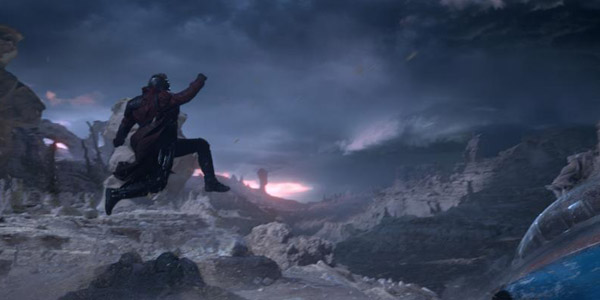
Last week I finally got to see Guardians of the Galaxy, and let me tell you, it was rather meh. It is a movie I want to like, and in fact do like, but it's not the movie it could have been.
I noticed a trend in movies, it's called CGI, some of you may already know that his stands for computer generated images. Haha, you say, pointing with your finger at the screen, that's old news, als old as...well...images generated by computers. To which I say: "shut up, lemme explain!".
CGI is a great tool, but mu8ch like other tools, it's also a weapon mankind is not yet ready for. CGI has effectively been around since at least the early eighties, and indeed has made possible some great movie moments, which could only have been dreamt of before. It's in the nature of things for SciFi and Fantasy movies to benefit from them the most; they inertly deal with imaginary things more then contemporary or historical movies, as those things are real, and it's just that some of them are not around any more. They need to be recreated...not just created in the first place. Mark that distinction, it's the point.


The video above shows pretty much everything I hate about CGI, and they talk about it as if they found a way to make Ice cream flavoured Lasagna (That does sound delicious, right, you guys?).

For starters,  at 18:30, you can see Obi Wan (I'm not going to explain Star Wars, if you're here, you'll know) hanging from a little flying robot (nowadays it'd be called a drone), except for the fact he does not at all. Later on you see him jumping through a windows, that not even has any glass. So, really, he does not do that, too. Now obviously, I'm not asking Ewan McGregor to hurt himself by jumping through a real, oh-my-gods, that'- solid-I-broke-my-shoulder window. But in earlier, less sophisticated times, someone had to...

So, here are some real ones, go ahead, I'll wait.

http://cinemassacre.com/2013/05/06/top-20-window-jumps/

Now I can't vouch for all of those videos, and maybe stunt men and trick glass were involved, but at some point something flew through something prone to shattering...and our brains can see the difference, for random processes like fire, water or things just collapsing are some of the hardest things to animate, because of their quasi randomness. But jumping through a real window...however bad the movie may be, you just saw someone doing something really cool.

And then of course there's the way actors react to CGI...because essentially, it is not there. If you watched the above video, then you know that Ewan Mcgregor had to act towards a spot on a blue wall. No reaction, no chemistry. Look at the fight between Count Dooku and "Yoda" at 20:30. And then at 39:40 Lucas has to actually ask for Yoda's robe to billow...Now wonder CGI movies look like video games.

Compare all those examples to that:

 See what they did there?


However much that scene might have been rigged, (I even included scenes of filming for reference) there's no denying that at one point, Holy shit, you guys, a guy climbed under the truck, was towed behind it and entered the cabin from above, and another climbed on top of the moving truck.

At first, when films like the Lord of the Rings, van Helsing, stuff like that, hit the cinemas, I was on board. I liked how CGI was generally used to improve a visuals, to show things that otherwise would have been impossible. Avatar is a good example. But nowadays, Guardians of the Galaxy isn't so much an improvement of reality, it's more an animated movie with some actors strewn across.

My problem is that CGI is getting so good and easily available that there's seemingly no reason for filmmakers to ask themselves if it's necessary.

And yet it seems artificial, because our brains tell us that it's just impossible. But it is grounded through human actors, and therefore it doesn't warrant the same willing suspension of disbelief like a fully animated film, or one where the practical effects don't announce themselves so loudly.
"But Arthur", you say twiddling your 3D-glasses in your spndly fingers in the line for the cinema, "what are we to do?".

Well, it seems we don't need to do anything, because as CGI is getting better, it's getting more expensive. And that means that more an more filmmakers are going back to practical effects. Watch out for Chris Nolan, for example, and rejoice because right now he is such a huge influence in the industry.

Great scene, no CGI, or at least not realzied solely through it. That's important. Don't simply abstain, but use it thoughtfully.


Friday, 3 October 2014

On the vacuum of Sources of british history in the first half of the first millenium


I promised to talk about Arthur's first years as King and about the sword in the stone. But in my research I found a very interesting quote, and I wanted to share it here:

The 20th-century historian Frank Stenton wrote that "the continuous history of Northumbria, and indeed of England, begins with the reign of Æthelfrith", and that "he was the real founder of the historic Northumbrian kingdom, and he was remembered as the first great leader who had arisen among the northern Angles."[3]


Wikipedia, emphasize mine.

This means that there is no reliable history before 592, the first year of Æthelfrith's rule. This is not a hard and fast date, but it goes a long way towards explaining why people felt the need to fill that void. Looking at history, we can see where we are coming from, hence we might no better were we are supposed to go. We haven't delved too deep in the topic of sources yet, but it seems reasonable to assume the same relative scarcity then as today. Even contemporary accounts a usually copies from ealier texts, with all the caveats that this brings about.

My point being, in absence of historical evidence people in general and scholars especially created there own history. In doing so they gave themselves a heritage, the legitimized their position and found their place in the world.This was especially important for Kings and other rulers. They needed not only worldly authority, but also divine. Otherwise they'd just be the bullies that came out on top because they had the most support. And that made them vulnerable to other contenders. They paid researchers, scholars and others to provide them that legitimacy. It wasn't called that, of course, nor was the intention usually to commit outright fraud.

But with the scarcity of sources came freedom to make things up. This may have been done with the best of intentions, based on assumed historical evidence, but it also permitted the indiscriminate use of word of mouth, oral tradition and outright fairy tales.

The world was in a way a bigger and scarier place then, and there were huge white areas on the maps. Forests were so big and untamed that they posed real dangers to those travelling towards them. Strange sounds in the night, weather phenomenons like draughts or snow storms or sickness and omnipresent death (childbirth could kill you, so could an impacted molar!) were easy to attribute to supernatural forces. And that's understandable, because people knew less then (although I'd argue that they knew more than we commonly believe, more on that later), and in fact could know only less, considering the technical innovations and social upheavals that took place since then.

I explain that because I don't want us to look down on them as ssuperstitious savages, not on par with our cerebral capacities. That's simply not true, starting with the biology. If these people had not tried to find answers to their questions, we'd have nothing to build upon. And even those false historical accounts are better than nothing, because through their shape they still allow us to deduce the true happenings behind them to a certain degree, when else we would have nothing.

Wednesday, 1 October 2014

The story of Arthur, Part 1

At first I wanted to talk exclusively about the historical basis of Arthur at that point of time. But then I decided to lay some groundwork, because it will make it easier to appreciate the gap between the historical Arthur and the fictional one. If indeed it is a gap. A gap needs to sides, and at this point I'm not all that certain there is a historical Arthur at all. It's no coincidence I wrote story, not history, of Arthur.

I will refrain from saying "usually" or " generally" from here on out, but bear in mind that everything about those characters and events is fluid, and there's no true right or wrong to be determined. At all. This stories has been told thousands of times. Everyone will be familiar with at least some part of it, or even one or another of it's incarnations, it's really quite impossible to avoid. I will try to order those many fragments, to forge a coherent narrative of what once was many different stories across different times and places. More on that later. That's also the reason this merely part one.

I will have to write that one a lot, more on that later, so I'd better Strg+C it now.

Arthur is usually born the son of King Uther Pendragon, ruler of Britannia at the time. He is begotten on Igraine. The circumstances of his conception are usually the subject of much discussion, not only ours, but also within the story. At the time, Igraine is actually married to Gorlois, King of Cornwall. He is generally dead when Arthur is conceived, but sometimes only a scant few hours, so that the kinship between Arthur and Uther is constantly questioned by his peers, and especially his adversaries. That's not the icky part, though. In most stories, Uther enters Gorlois' castle Cornwall immediately after the big battle where Gorlois lost. The news of his defeat have not yet arrived, allowing Uther to enter in the guise of Gorlois. He is sometimes helped by Merlin in this, and it is implied that some magic or other is applied to hide Uther's identity. While Uther has genuine affection for Igraine (that she sometimes returns) and later makes her his queen, sleeping with a woman under the pretence of being someone else, clouding her judgement through external means, is more than unsuitable. It is never thus stated in the stories themselves beyond what I said above, but this, my friends, is rape. No discussion there. If I am right, there is one notable exception to this, but we will see that only much further down the road.

What is important from a story reason is that Arthur usually is a fusion of the old ways of Britain, represented by Igraine, and the way of the roman ursurpers, from which Uther comes. There is also a whole subtopic of christianity and pagandom, but more on that later.

Arthur is then hidden away to protect him, and the whole kingdom thinks that Uther is without a heir. Without going to deep into medieval inheritance rules of the nobility, let it suffice to say that this is a problem. Arthur's foster-father is sir Hector, and he has a foster-brother in Kay. Kay is usually the odd one of all his friends, and we will talk exclusively of him another time. Arthur doesn't know he's the heir to the throne (very few people do), and thinks himself some base-born bastard, longing to be a knight and dreaming of chivalry (more on that term later).

I'm going to stop here, and I'll admit that I had hoped to cover more ground in this post. Alas, it should not have been. Next time we will concern ourselves with the famous sword in the sword and Arthur's first years of being King.

The more I write the more I realise that I will have material for a long time, which was initially a concern for me. I think I might at sometime also do some character portraits, I feel that would fit the purpose.

Friday, 26 September 2014

Imagine that...

...you are an archeologist, swinging on whips about crevaces willy-nilly, digging up lost treasures and arguing with your father about everything. Got it? Good.

One day, you're visiting an old ruin, castle of King somesuch from somewhere. On a hunch, you dig in a certain spot and lo and behold, you find a chest. You open it, and in it you find an old manuscript. "Well strike me hard and call me Magda", you might think (to you history buffs, do you do that?). This piece of writing actually seems to fill huge gap in the timeline of middle europe around the middle-ages. It'll make you famous. Well, at least it will make you what passes for famous in the history community.

All sarcasm aside; there are a few things to consider. First of all: is your document really that old? And how can you determine? Your first clue might be a date given in the writings themselves. Further, you should look at the materials used. Every age has their respective range of typically used materials. Think of how we've come to asociate papyrus scrolls with old egypt, or stone plates with the mesopoatamians.

The best solution though might be dating it using the radio-carbon method. It works something like this: Everything that grows incoporates isotopes into their tissue or structure. These isotopes can be dated by physics. So if paper is made from trees, and the youngest isotope ist from ca. 1500, your document can't be younger than that. But what if the trees kind wasn't indigenous at the place of the writing in the time of writing? You should do that for the ink, too. Forging documents by writing with new ink on old paper is not unheard of.

Even when all that checks out, you have to be wary of the content itselve. Just imagine someone finding a splatbook for  AD&D a hundred years from now. Try to square that with what you know about the past, Mr. Future Archeologist.


Your find may have been a novel, or an attempt at fudging the history in the writer's favor or the favor of his leader. Once again, it may simply be wrong. News travelled a lot slower in these days, and word of mouth is prone to mistakes. It also may be just a copy of something else. All that opens a new can of worms: How far can you trust it? Does ist cross reference something, maybe other documents from that time?

That's where will continue next time. As for thewriting, I gave that article some snark on purpose. Tell me how you liked it.

Thursday, 25 September 2014

...in which not all that glitters is gold


  • Year 72 (c. AD 516) The Battle of Badon, in which Arthur carried the cross of our Lord Jesus Christ on his shoulders for three days and three nights and the Britons were victors.

  • Year 93 (c. 537) The Strife of Camlann in which Arthur and Mordred fell and there was death in Britain and in Ireland

That's it. That the historical basis the scholastic community can agree upon concerning the matter of a living, breathing (not anymore so, though) person, that might have some semblance to the what we know as King Arthur.

Why is that disclaimer so important?

If you know your way around history you know that our picture of the past is informed by what is known as sources. Sources run the whole spectrum from written texts to stuff our ancestors through away. Imagine that, your carbage can might tell someone very interesting things about you in centuries to come (maybe even right now, if your garbage man is a bit strange. Maybe lock those things away). It's important to consider that those sources alomost always are biased. Or simply wrong. Or worst of all, forgeries. This heavily conflicts with one of our goals to become a writer: Know your stuff. We will see what that means in practical terms as we delve deeper into the mysteries surrounding Arthur.

What this means ist that you not only have to hunt down sources, you then have to evaluate them. The case of Arthur is perfect for that. The first thing we need to come to terms with: That probably wasn't his real name. What you see above is a translated version of the so called easter annals. His actual name there is Afderydd. This goes for all of the names we will encounter. 

Why that is is a topic for anttoher blog, since I want to keep entries from dragging on to long. It's easy to get exhausted by all of this.